Short Answer: With right allocation of tasks to people at the appropriate time, elimination of all possible delays, disruption, and keeping proper hygiene standards, smart scheduling maximizes the efficiency of commercial cleaning procedures. Advanced Facility Care assists Auckland businesses in having cleaner and healthier working environment through organized commercial cleaning services according to their premises, timings, and cleaning needs.
Commercial cleaning needs to be done taking into account the operational characteristics of each business in Auckland, whether in the CBD, Newmarket, or even Albany, East Tamaki and Manukau, New Zealand. Offices require cleaning during non-business hours whereas shops, hospitals and other commercial places might require more frequent cleaning during business hours.
Maintain your Auckland workplace clean, organized and business-ready with an efficient commercial cleaning in Auckland plan for your business operations.
Short Summary
Smart cleaning schedules will help businesses keep up with hygiene, minimize disruptions, and be resource efficient in their cleaning processes. Advanced Facility Care (New Zealand) Limited provides customized commercial cleaning solutions to businesses in Auckland by offering them professional environment through its high-quality services and industry-certifications.
What Is Smart Scheduling in Commercial Cleaning?
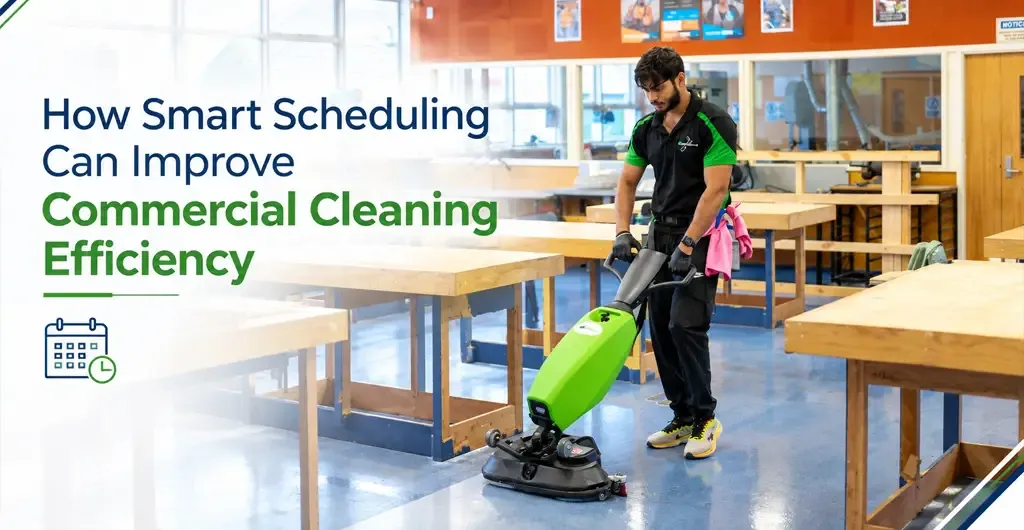
Smart cleaning means organizing cleaning operations based on the size, occupation level, demands for cleanliness, and work hours of a given location. Instead of applying fixed schedules, companies will get to set their priorities and organize timing for cleaning their premises according to the changing requirements.
With more than 25 years of experience, we provide a systematic way of organising cleaning tasks, allocating duties and setting appropriate service times. For instance, the Auckland office would need desks, kitchens, washrooms, and common spaces cleaned after closing time, while the commercial site would need check-ups and cleaning of high-frequency surfaces during working hours.
Once the schedule is established, we help our clients to establish a more consistent office cleaning schedule that suits their workplace.
Which Factors Should Businesses Consider When Scheduling Cleaning Tasks?
Workplace traffic, operating times, hygiene requirements, facility size, and availability of cleaning staff are some of the factors that should be taken into account when scheduling cleaning activities. We recognize the fact that every business has different cleaning priorities ranging from commercial office cleaning to industrial cleaning to high-traffic area cleaning.
New Zealand’s cleaning industry contributes approximately $1.6 billion to GDP The following table outlines how businesses can translate their cleaning requirements into practical scheduling decisions in New Zealand.
| Factor | Recommended Scheduling Approach | Example Tasks |
| High foot traffic | Clean several times daily or as needed | Entrance floors, reception desks, shared touchpoints |
| Washroom hygiene | Inspect and clean daily, with checks throughout the day | Toilets, sinks, mirrors, replenishing consumables |
| Office operations | Schedule around meetings and working hours | Desk areas, meeting rooms, shared spaces |
| Facility size | Allocate time according to the area and layout | Floor cleaning, waste removal, detailed cleaning |
| Seasonal conditions | Increase frequency when required | Entrance mats, wet floors, high-touch surfaces |
| Budget and staffing | Prioritise essential tasks and agree on service frequency | Routine cleaning, periodic deep cleaning |
| Special events | Arrange additional cleaning before or after use | Event spaces, conference rooms, visitor areas |
We take all these factors into account to develop the schedule for modern commercial cleaning practices that will depend on the needs of each specific Auckland business and not just rely on a set procedure.
Turn cleaning from a daily challenge into a manageable process with a more efficient approach to office hygiene practices.
Conclusion: Make Commercial Cleaning More Efficient with Smarter Scheduling
At Advanced Facility Care, our cleaners enable businesses to get control over their commercial cleaning with planned schedules, reliable services and solutions designed to meet the demands of their operations. We operate with the objective of protecting people, the environment, property, and also our clients.
With expertise in cleaning for different industries, we deliver practical solutions backed by ISO 9001, ISO 14001, and ISO 45001 certifications and SiteWise Gold prequalification. We serve industries across Auckland, New Zealand, including Auckland CBD, Albany, East Tamaki and many more.
Save time on dealing with cleaning disruptions and focus on your core business.
Frequently Asked Questions About Smart Scheduling in Commercial Cleaning
What is smart scheduling in commercial cleaning?
Smart scheduling involves organising cleaning tasks according to workplace occupancy, operating hours, hygiene requirements, and priorities. It helps cleaning teams use their time efficiently, maintain consistent standards, and minimise disruption to daily business activities.
How does smart scheduling improve commercial cleaning efficiency?
Smart scheduling reduces wasted time, prevents overlapping duties, and ensures priority areas receive appropriate attention. By allocating tasks effectively, businesses can improve productivity, maintain workplace hygiene, and make better use of available cleaning resources.
How often should commercial offices be cleaned?
Commercial offices generally benefit from daily cleaning of frequently used areas, including kitchens, washrooms, and shared spaces. However, the ideal frequency depends on employee numbers, foot traffic, workplace activities, and specific hygiene requirements.
Can commercial cleaning be scheduled outside business hours?
Yes, commercial cleaning can be arranged before opening, after closing, or during quieter periods. These schedules help minimise interruptions, allowing employees to concentrate on their responsibilities while maintaining a clean and presentable workplace.
What factors influence a commercial cleaning schedule?
Important factors include building size, occupancy, operating hours, foot traffic, hygiene standards, and staff availability. Businesses should also consider seasonal changes and industry-specific requirements when determining suitable cleaning frequencies and task priorities.
How can technology improve commercial cleaning schedules?
Digital scheduling tools, task checklists, and service records help organise cleaning duties and monitor completion. These tools improve communication, highlight recurring issues, and allow businesses to adjust cleaning routines when workplace requirements change.
Does smart scheduling help reduce commercial cleaning costs?
Smart scheduling can help control cleaning costs by reducing unnecessary visits, avoiding duplicated tasks, and allocating resources according to actual needs. However, savings depend on the premises, cleaning requirements, staffing arrangements, and scheduling methods used.
How can businesses maintain consistent cleaning standards?
Businesses can maintain consistency through clear task lists, defined cleaning frequencies, regular inspections, and effective communication. Reviewing cleaning schedules periodically also helps identify overlooked areas and ensures routines continue meeting workplace expectations.
How can professional cleaning services improve workplace hygiene?
Professional cleaning services help maintain hygienic workspaces through planned routines, attention to high-touch surfaces, and consistent cleaning standards. Advanced Facility Care provides tailored commercial cleaning solutions to help Auckland businesses maintain clean, welcoming environments.
Can commercial cleaning schedules be customised for different businesses?
Yes, commercial cleaning schedules can be adjusted according to premises size, operating hours, foot traffic, and hygiene priorities. Advanced Facility Care works with Auckland businesses to plan suitable cleaning arrangements that minimise disruption and support daily operations.